
Sovereign capital
Deterrence capital does not optimize for IRR. In this industry a company is often funded because it is the only one inside the jurisdiction with the capability.
SevenTrain & Co. Quantum Intelligence Fund, L.P.
The breakthrough is proven, the value chain is forming, and the capital is crowding the wrong layer.
01
Hover or tap any layer for the argument. Tap a chip for the detail.
AI baskets are public, equal-weighted, indexed January 2017. Hardware led at 52.3x; software, enablement and supply chain each cleared 29x. Systems and control commoditized.
02 · Capital Allocation Target
Whilst most eyes are currently on the technicalities of how to develop functioning computers, few are on how they will actually be used. These companies are booking revenue today on classical hardware. They own the customer before fault-tolerant machines arrive, and capture the FTQC value as a software update, not a new sale.
Photonic interconnects, control electronics, cryogenics, lasers and components. Every hardware program, in every modality, buys this stack today, and the bill grows with every qubit added on every roadmap.
The first quantum magnetometer reached orbit in March 2026 to keep the World Magnetic Model accurate for every phone compass and aircraft heading. Adjacent markets in GPS-denied navigation, defense, medical and infrastructure.
Data is already being harvested for later decryption today. Once cryptographically relevant quantum computers are sufficiently large they will with relative ease break the public-key cryptography all of modern society is built on.
A breakthrough reserve sits alongside the four pillars, held for fault-tolerant hardware. First FTQC on the cloud in 2028, exits 2032 to 2036 by IPO.
Deterrence capital does not optimize for IRR. In this industry a company is often funded because it is the only one inside the jurisdiction with the capability.
Companies are emerging fast; talent is not. The best talent attracts the best talent. The team most likely to solve a problem yet unsolved is the one with the better talent and expertise.
We back the best supplier wherever they are and connect them with the American buyer.
A strong pulse on R&D, academia and research — an unfair advantage in dealflow and in reading where the technology goes next.



Entry into competitive early-stage rounds, and standing relationships with the mid- and later-stage investors who carry winners onward.
PsiQuantum — entered early to mid
Ownership beyond checks: client introductions, investor relations and fractional-CFO support, structured as warrants to the fund. Founders look for venture development, not just capital — we are operators ourselves.
Three screens govern every underwriting decision.
Pipeline shown is illustrative only. No term sheet has been issued and no commitment or allocation is implied. Round and investor data are company-announced or third-party figures verified against primary sources as of 30 August 2026. Valuations are shown only where the company has disclosed them.
Partners and advisors
Two partners run the fund. The senior advisors and the technical board sit behind them, and are named in full in the definitive PPM.

Founding Partner, SevenTrain Ventures, and architect of Decision OS. Twenty-five years of Wall Street experience.






Founder and operator across venture and early-stage finance. MSc Finance. Co-author of The Intelligence Wars.







 Technical Advisory BoardAnthony LawrenceCEO, Light Rider. Founder and CEO, VOR Technology. Former NSA.
 VOR
VOR
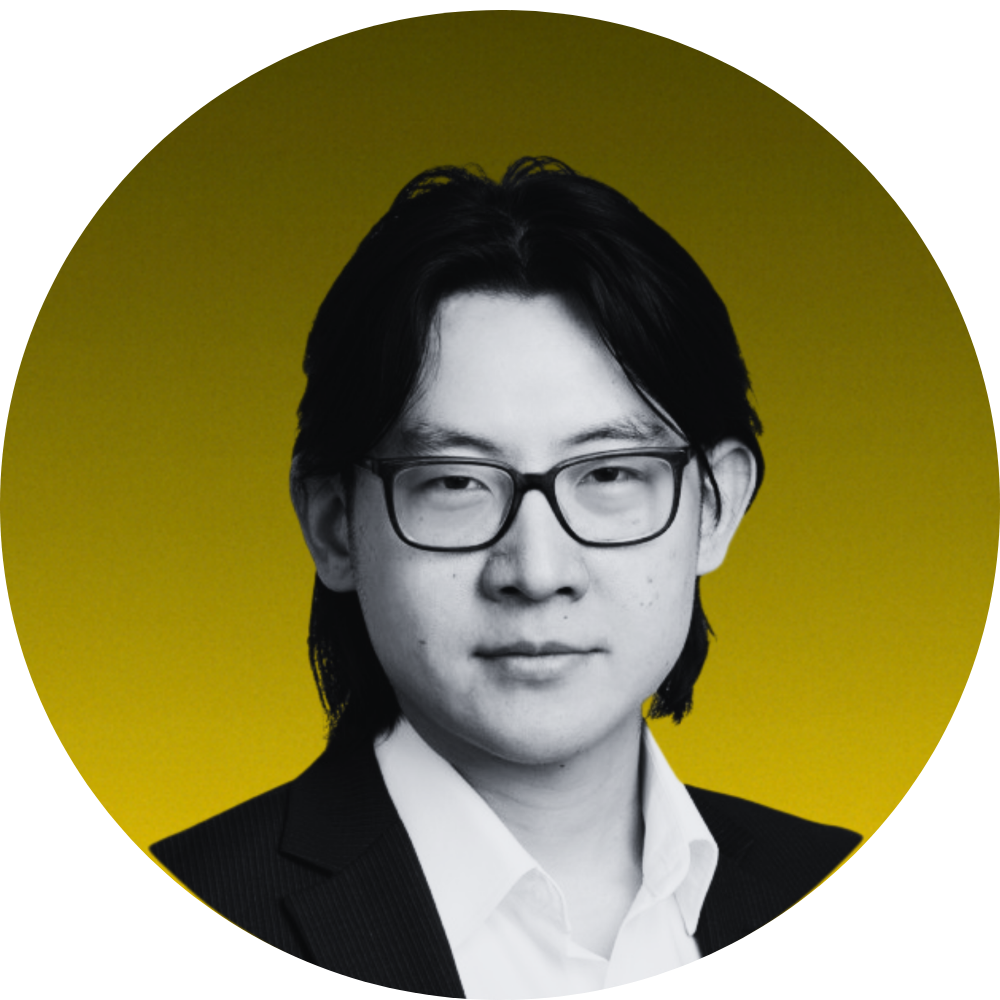 Technical Advisory BoardYudong CaoCTO, Zapata Quantum. Former Head of Quantum, BCG X.Zapata
 X
XThe Quantum Technical Advisory Board is in formation and named in full in the definitive PPM. Disclosure: Light Rider, where Mr. Lawrence is CEO, is a pipeline company under evaluation. Any investment would be made under the conflicts-of-interest provisions of the PPM.
The full Quantum Intelligence Fund summary goes to qualified investors only. One click opens the request in your mail client, already written — add your details and send.
Where the stack eventually earns revenue from F500 companies and governments, which trickles it down through the layers of the stack. Advanced, but not commercially ready: the computers it relies on have been theorised, not manufactured.
Here we look for companies with a deep understanding of the problem as they are already providing solutions and have a roadmap for quantum integration.
Thin revenue from selling NISQ machine time. Squeezed from both sides: hyperscalers sell access per shot, differentiation migrates down into control and up into compilation.
Most investment, highest valuations, longest horizon. Billions spent making one chip bigger and cleaner.
Transistor density stays theoretical until readout and wiring stop being built one qubit at a time.
The layer that attacks today’s actual bottlenecks. Room-sized 1969 moon computer to the phone in your pocket. Every modality buys from here regardless of which architecture wins.
Few qualified sources, long qualification cycles, and demand that grows with every machine built. A programme can clear every technical milestone and still be rate-limited by a component with one foreign source.
$600k for a standard unit, several million for a 1,000-qubit-class system. Seven tonnes, a week to cool. Smaller systems or on-chip cooling are poised to slash the cost of these systems.
A heat and wiring problem. New approaches to control electronics may accelerate the development of multiple modalities.
Fast and noiseless entanglement over fiber across meters and kilometers would unlock quantum supercomputing and the quantum internet.
Thousands of stable beams have to reach thousands of atoms; today that means a room of optical tables. In neutral atoms the laser is the gate, so laser noise is the fidelity ceiling. Moving beam delivery onto photonic chips would shrink the largest and most expensive part of an atom machine and raise the ceiling at the same time.
Microwave to optical opens cross-modality computing. Potential to transform superconducting readout by connecting the qubit cavity to a functional electro-optic transducer, which would eliminate much of the modality’s scaling problems.
Room-temperature detectors are too noisy. The good ones are nanowires at 2 kelvin. A higher-temperature noiseless detector would reduce the limitation of photonics.
Nascent. If loading the data costs what the classical answer costs, there is no speedup.
Helium-3 comes almost exclusively from tritium decay in nuclear weapons stockpiles at about twenty thousand litres a year worldwide. Currently there is no substitute. Civilian demand is expected to grow from 1,200 to 16,000 liters/year in the next decade.
Quantum-grade diamond, enriched silicon-28, tantalum, niobium, sapphire, UV optics. Few qualified sources, long qualification cycles, and demand that grows with every machine built.
Anthropic, OpenAI, MSFT, GOOGL, META, PLTR, APP
Differentiation migrated down into hardware and up into applications. No basket.
NVDA, AMD, AVGO, MRVL
TSM, MU, SK Hynix, ANET, Coherent
ASML, AMAT, LRCX, KLAC, Advantest